
The best scenic routes for a one-week South England road trip from London
If you’re picturing England as grey skies and city streets, Sussex is the answer to that misconception. An hour or so from London, the roads open up into chalk downland, medieval market towns, and a coastline that swings from genteel to wild within a few miles. It’s one of the most rewarding stretches of the country to explore by car, and one of the most underused by abroad travellers who fly into London and never make it past the M25.
This guide maps out a one-week self-drive route from London through the South Downs to the Sussex coast, with the towns worth stopping in, the roads worth slowing down for, and what you need to know about driving in the UK if you’re used to doing it on the other side of the road.
Why Sussex works as a road trip base
Most UK road trip guides send you straight to the Cotswolds or up to the Lake District, both of which mean hours of driving before you see anything. Sussex has a different advantage: it’s close enough to London that you’re not losing a day to travel, and varied enough that you don’t need to keep moving to see something new.
That’s the argument for basing yourself in one place rather than hopping between hotels every night, which is worth thinking about before you build your itinerary. A single base in Sussex, ideally one with the kind of concierge support that can point you toward the right lanes and dinner bookings, means you unpack once and spend the week exploring rather than packing.
The Butler Collection works well for exactly this. Our properties sit within easy reach of the South Downs, Chichester, and the coast, and the concierge team will build you a day-by-day plan tailored to what you actually want to see, rather than a generic list. It’s a quieter, more considered way to do a road trip than the London-hotel-hopping most visitors default to.
The route: London to the South Downs
Leaving London, the A3 or A24 will get you into Surrey and then Sussex within an hour and a half, depending on traffic. Skip the motorway the moment you can. The A286 and the smaller lanes through the Downs are where this trip earns its name, and where the bets views are.
The South Downs National Park is the spine of the whole route: rolling chalk hills, sheep-grazed fields, and a network of single-track roads that reward unhurried driving and a great roadtrip playlist. Devil’s Dyke, near Brighton, gives you one of the best views in the county for very little effort, a short walk from the car park to a ridge overlooking the Weald.
If you have a full day here, build in a stop at Petworth, a small town known for its antiques shops and Petworth House, a National Trust property with one of the best art collections outside London. It’s an easy half-day and a good introduction to the pace this trip should keep.
Arundel: the postcard stop
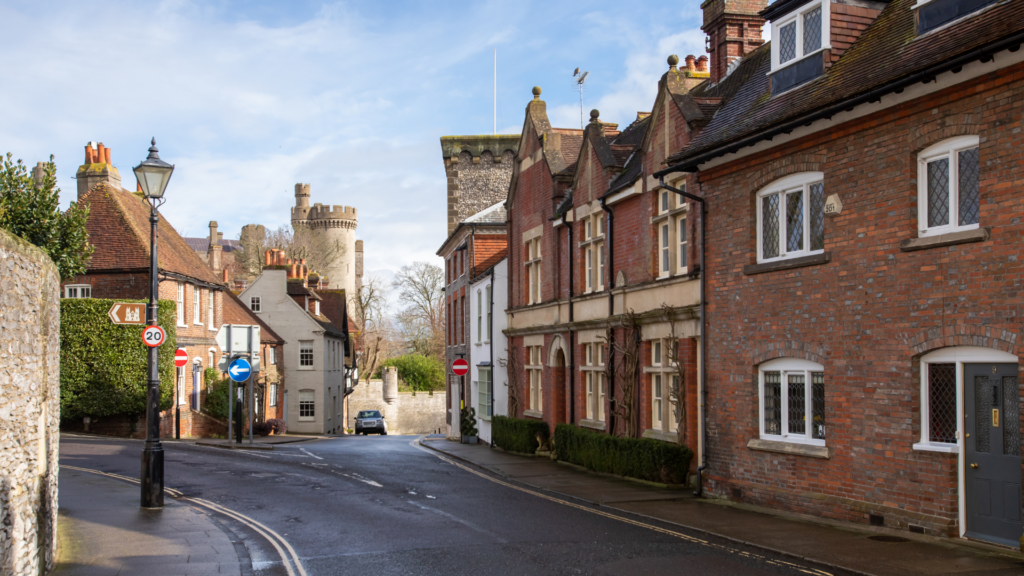
Arundel is the town most people photograph and few people plan around, which is a mistake. Arundel Castle dominates the skyline and is genuinely worth the entry fee, particularly if you time your visit for the gardens in bloom between April and September.
The town itself is built for walking: independent bookshops, a good bakery or two, and a riverside path along the Arun that’s especially pleasant in the early evening. Park once and do it all on foot. This is a strong lunch stop on a South Downs day, and close enough to a Sussex base that you could return for dinner without much of a detour.
Chichester: history without the crowds
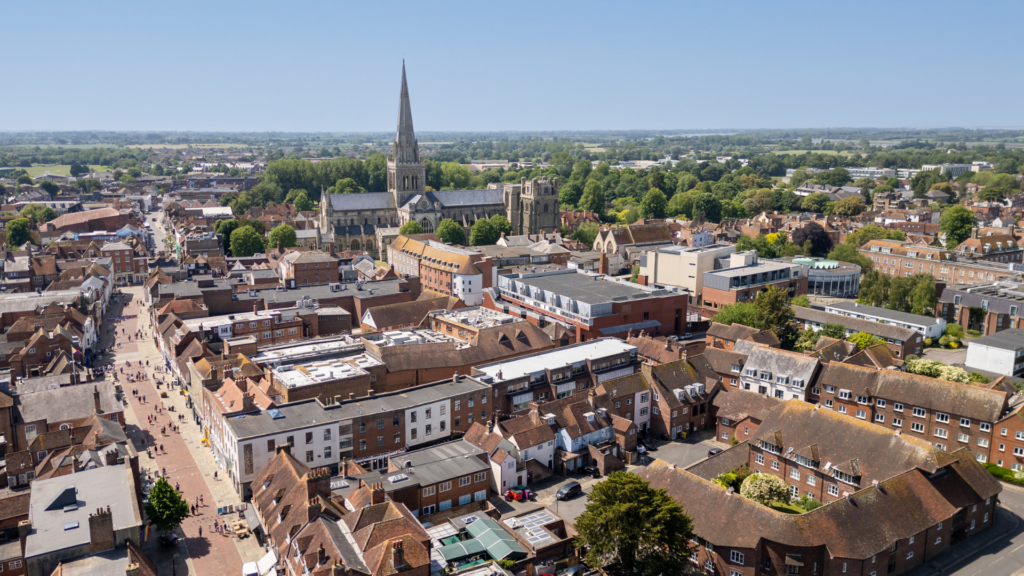
Chichester doesn’t get the tourist numbers of Brighton, which is precisely its appeal. The cathedral dates back to the eleventh century and sits at the centre of a compact, walkable city with Roman roots (the four main streets still follow the original Roman street plan).
For something less obvious, the Chichester Harbour area to the south is worth an afternoon: sailing boats, tidal creeks, and a handful of excellent pubs with water views, particularly around Bosham. If you’re driving from a Sussex base, this makes an easy loop that combines history in the morning with something slower by the water in the afternoon.
Chichester is also a good place to build in flexibility. It’s close enough to the coast and the Downs that you can decide the night before whether tomorrow is a beach day or a hills day.
Brighton: the coastal contrast
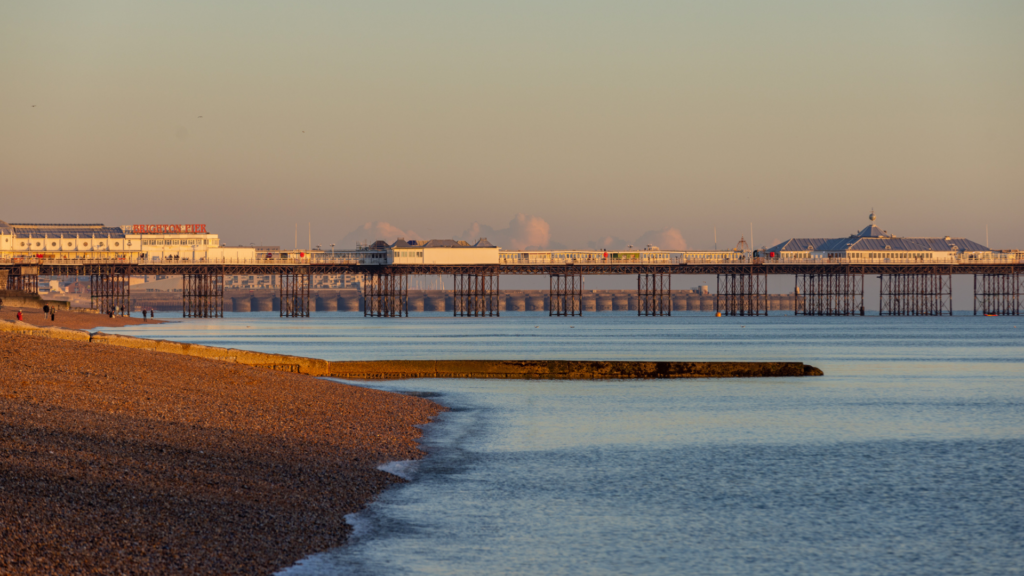
No Sussex road trip skips Brighton, and it shouldn’t. After several days of countryside towns, Brighton’s energy is a deliberate shift: the Lanes for shopping and food, the Pavilion for the sheer strangeness of its architecture, and the pebble beach and pier for the classic English seaside experience.
Parking in central Brighton is tight and not cheap, so this is a day to park on the outskirts and walk in, or use the train from a nearby town if your base is close to a station. Brighton rewards an evening as much as a day. Book dinner somewhere in Kemptown or the North Laine rather than the seafront strip, and you’ll get a much better sense of the city.
The West Sussex coast: slower and less crowded
Where Brighton is loud, the West Sussex coast is not. Bognor Regis, West Wittering, and the stretch around Selsey give you beaches without the crowds, and West Wittering beach in particular is one of the best swimming beaches in the county on a clear day.
This is the right day to slow the whole trip down. Fewer stops, more time in each one. A picnic on the beach, a walk along the coastal path, an early dinner somewhere that isn’t trying to turn tables. After Brighton, it’s the reset the itinerary needs.
A suggested seven-day structure
- Day 1: Arrive from London, settle into your Sussex base, short local walk or dinner nearby
- Day 2: South Downs drive, Devil’s Dyke, Petworth for lunch
- Day 3: Arundel Castle and town, riverside walk
- Day 4: Chichester Cathedral and city centre, Chichester Harbour in the afternoon
- Day 5: Brighton, Lanes and Pavilion by day, dinner in Kemptown
- Day 6: West Sussex coast, West Wittering or Selsey, slow day by the water
- Day 7: Free day for whatever’s been missed, or a return loop through the Downs before heading back to London
Keep this loose. The whole appeal of a Sussex base is that nothing is more than 45 minutes away, so you can swap days around based on weather without losing much time.
Practical tips for driving in the UK (for abroad travellers)
If you’re used to driving on the right, a few things are worth knowing before you collect the car:
- Drive on the left. Obvious, but it takes a day or two to stop instinctively drifting toward the wrong side, especially on roundabouts.
- Roundabouts go clockwise. Give way to traffic already on the roundabout, coming from your right.
- Country lanes are often single-track. Look for passing places and be ready to reverse into one if you meet oncoming traffic. This is normal here, not a wrong turn.
- Speed limits are in miles per hour, not kilometres. 30 in a town, 60 on most single-carriageway country roads, 70 on motorways.
- Parking is often pay-and-display or app-based. Apps like RingGo cover most council car parks in Sussex. Check the signage before you walk away.
- Fuel is sold by the litre, and gets more expensive the further you are from a motorway service station. Fill up in a town rather than waiting.
- A satnav is more useful than instinct on the smaller lanes. Google Maps or Waze both handle rural Sussex roads well, but download offline maps in case of patchy signal in the Downs.
None of this is complicated, but it’s the sort of detail that trips people up on day one and stops mattering entirely by day three.
Why a single base changes the trip
The temptation with a UK road trip is to book a different hotel every night to “cover more ground.” In practice, that means an hour of checking in and out most days, which eats into the time you actually spend seeing anything.
A single base in Sussex avoids that entirely. You unpack once, and every day becomes a loop out and back rather than a relocation. It also means you can be more spontaneous: if the weather turns, you can swap a coastal day for a Downs day without cancelling a hotel booking somewhere else.
The Butler Collection’s properties are built around this kind of stay. Their concierge team can plan routes, book restaurants, and adjust the week as you go, which takes the logistics off your plate entirely and leaves you with the actual holiday.
A final thought from us
Sussex doesn’t ask you to choose between countryside and coastline. Within a single week and a single base, you get chalk downland, medieval towns, a proper seaside city, and quiet stretches of coast that most visitors to England never see. Skip the motorway where you can, keep the days loose, and let the county set the pace.